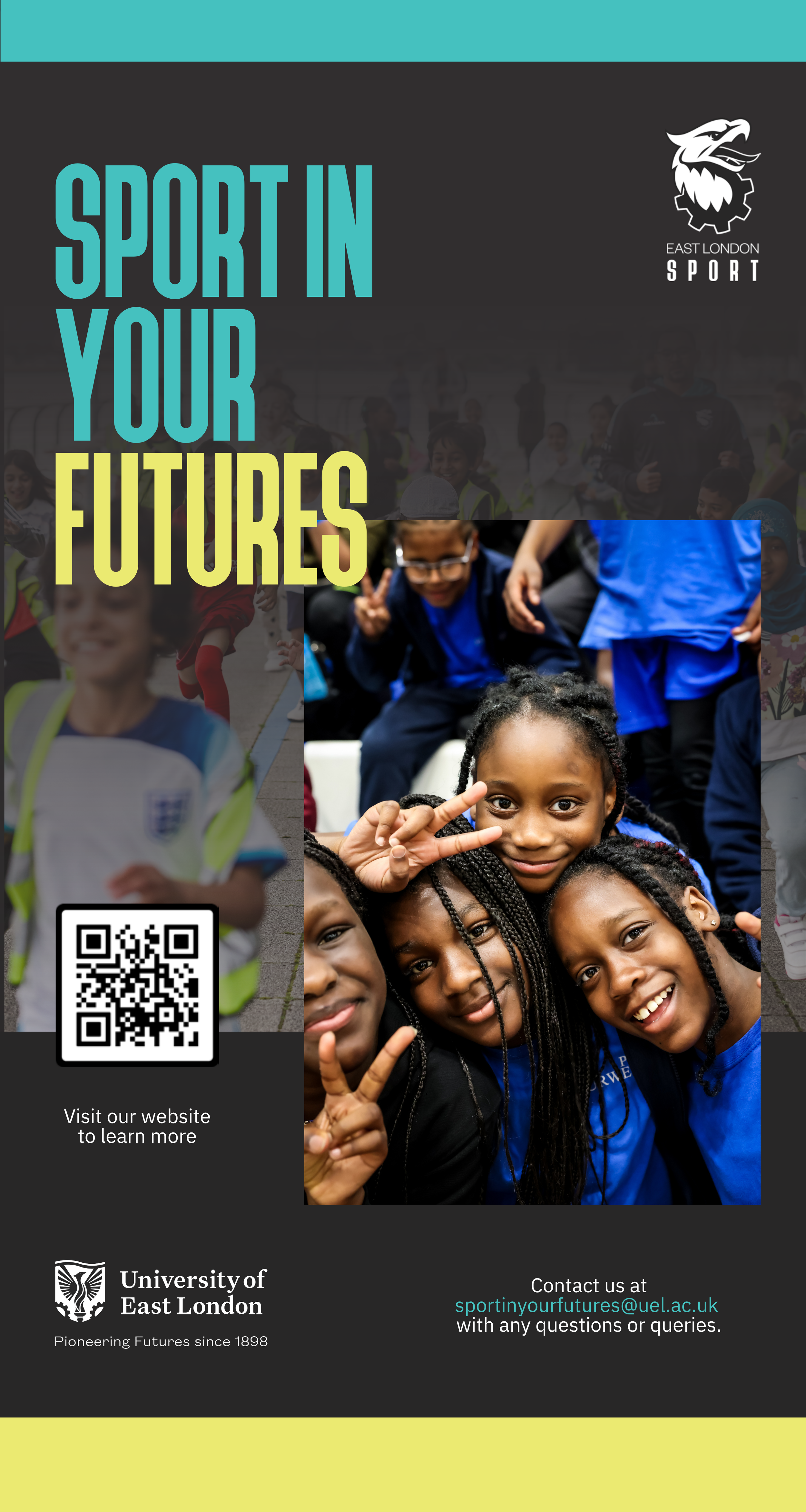
Sport in your futures |
Sport in your futures |

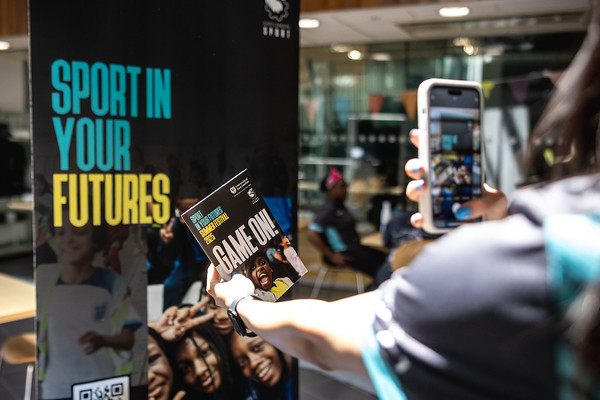
SPORT IN YOUR FUTURES
(Community, youth aspiration and social impact)
Focus: Using sport as a vehicle for social mobility, health equality, and early-stage brand affinity with local youth. A CSR-driven programme targeting London primary schools (ages 7-11) to promote sports-based career aspirations. Marketing bi-monthly panel events and sponsor activations, targeting school administrators and community leaders.
Situation
Sport In Your Futures (SIYF) is a long-running CSR and community engagement programme delivered by East London Sport in partnership with the University of East London. The programme uses sport as an entry point to improve confidence, aspiration and awareness of future education and career pathways for primary school children aged 7–11 across East London.
When I took ownership of the marketing, the challenge was not awareness in isolation, it was sustained demand management. SIYF runs bi-weekly events across an academic year, alongside large-scale seasonal festivals and sponsor activations. Success depended on keeping schools engaged year-round, balancing capacity, avoiding drop-off, and maintaining credibility with senior school leaders, funders and community partners. Unlike a one-off campaign, this required lifecycle marketing discipline, operational judgement and constant stakeholder alignment, not launch-led hype.
Task
My task was to lead the marketing for SIYF as an ongoing programme, not a series of events. I needed to:
Keep participation stable and growing across the October–June season
Retain repeat schools while onboarding new ones
Support delivery teams by filling events efficiently
Market new strands like inclusive sport, women-focused workshops and festivals without confusing the core offer
Evidence impact clearly for partners and senior stakeholders without exaggeration
I was accountable for planning, channels, messaging, stakeholder communication and performance tracking.

Action
Strategic approach:
I decided early that this needed to be treated as lifecycle marketing. I stopped thinking in terms of campaigns and instead built a repeatable system around recruitment, confirmation, delivery and follow-up.
I focused on three principles:
Schools value clarity more than persuasion
Scarcity works when it is honest
Credibility matters more than reach
This shaped every marketing decision that followed.
Audience and messaging
I defined the main audience as school decision-makers, headteachers, PE leads and safeguarding staff. Children were not the marketing audience, they were the beneficiaries.
Secondary audiences included community partners, sponsors and internal university stakeholders who required reassurance that SIYF was operationally credible, inclusive and reputationally safe.
I simplified the messaging to focus on what schools care about: safe delivery, clear outcomes, time efficiency and educational value. I avoided emotional language and future promises that could not be evidenced.
Channels and tools
I chose channels based on reliability, not trend:
Email via Mailchimp as the main recruitment and retention channel, segmented by borough and school history
Eventbrite to manage capacity, bookings and attendance
Direct outreach when events were under-subscribed
Social media used selectively for visibility, partner recognition and credibility, not lead generation
I pushed back on overusing social or paid media because it would not convert school decision-makers and would add noise without value.
Planning and delivery rhythm
The programme ran from October to June, with breaks for holidays. I worked backwards from confirmed event dates to set clear lead times for recruitment, reminders and confirmations.
I deliberately did not release all events at once. I decided to hold some dates back so schools felt genuine urgency and committed earlier, while still staying transparent.
For every event, I ensured:
Eventbrite setup with clear information
Early extraction of attendee lists
Pre-event confirmation and form completion
Post-event follow-up to reinforce the relationship
Campaign execution
The programme was executed as a series of "Aspiration Days" that grew in scale and complexity over a three-year cycle.
2022: I launched the foundation of the programme, passing the Olympic legacy to 280 school children in a pilot activation.
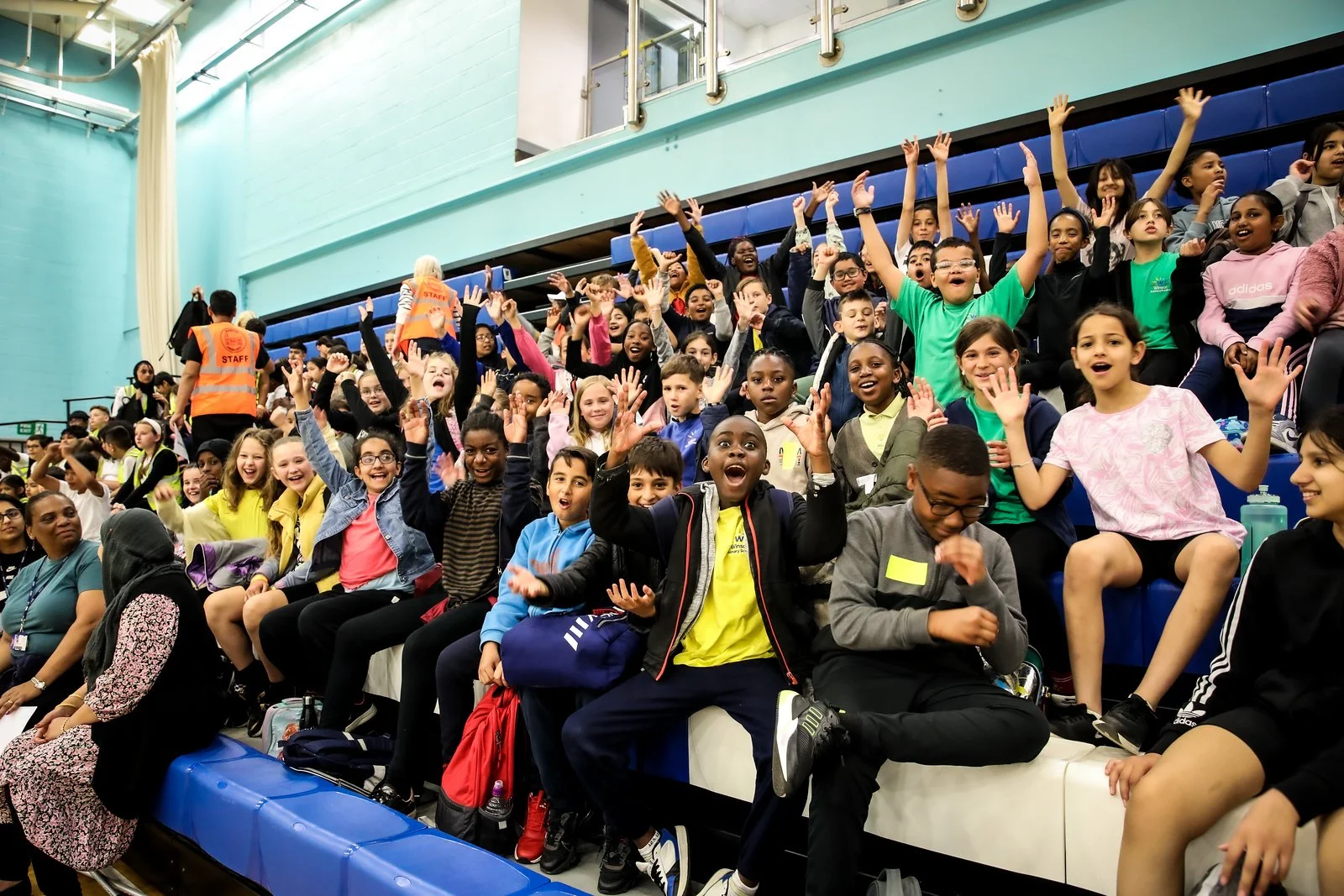
2023: I scaled the operation by over 60 percent, managing a multi-sport day for over 450 children at SportsDock.
2024: I introduced a "New Luxury" creative element by hosting an Olympian-led storytelling session, moving the brand into a more sophisticated cultural space that combined education and elite performance.
Stakeholder management
I worked closely with delivery leads, designers, photographers, videographers, community partners and senior university staff. I made sure marketing never promised anything delivery could not support.
For high-profile moments, including ambassador visits such as Christine Ohuruogu, and Ziana Butt MBE, I coordinated messaging carefully to balance visibility with safeguarding and school experience.
When new programme strands were introduced, such as inclusive sport, water sports and women-focused workshops, I adapted messaging without repositioning the programme or confusing repeat schools.
Managing constraints
Capacity was a constant constraint. Staffing shortages and school scheduling conflicts meant over a quarter of planned events were cancelled in some periods. There were also times that recurring schools showed up without signing-up via Eventbrite.
I adjusted recruitment pacing, Eventbrite ticket-sales closure period, reallocated places and managed expectations honestly with schools.
I also tracked school-level attendance changes to understand where engagement was falling or growing, rather than assuming all growth was positive.
Results
By 2024–25, Sport In Your Futures had engaged over 5,000 children cumulatively, with 1,890 pupils participating in the current year, a 12.3 percent increase year-on-year.
School participation increased slightly, with several new schools onboarded while maintaining strong engagement from established partners. Some schools declined in attendance, but overall engagement remained stable, which I saw as a sign of programme resilience rather than failure.
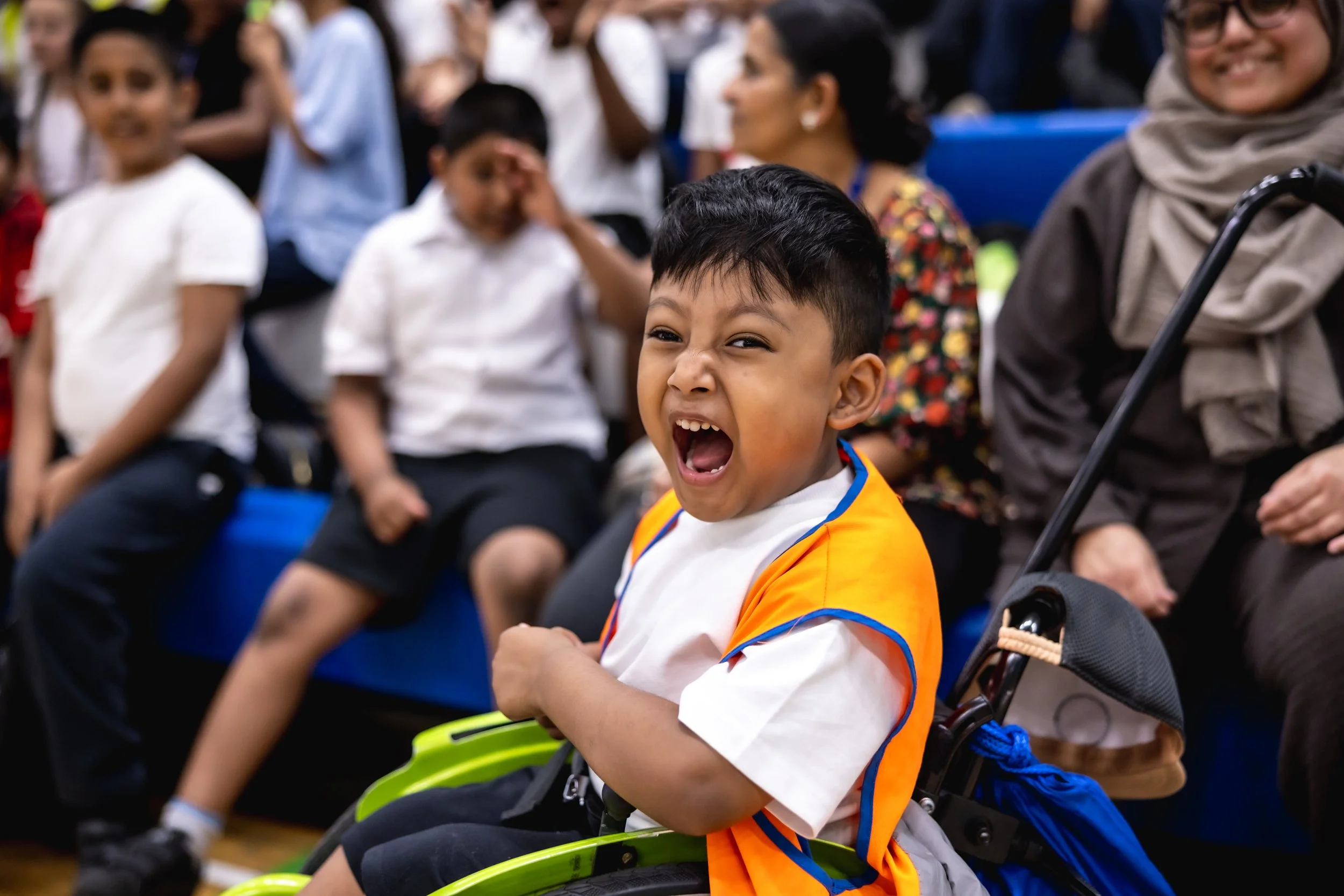
New activities such as boxing, taekwondo, rowing and sitting volleyball introduced over 1,000 pupils to inclusive and non-traditional sports formats.
Earned media from ambassador activity increased programme visibility in East London without shifting focus away from delivery. Internally, SIYF strengthened its position as a credible, well-run community programme aligned to the university’s wider mission.
The primary outcome was the successful transition from "outreach" to "pipeline marketing."
Brand Visibility: Secured national-level earned media and consistent local press coverage.
Scale: Increased attendance from 280 to over 450 children per event, proving a repeatable and scalable model.
Strategic Proof: The Early Years & Youth Impact Report provided the data needed to secure continued investment from institutional stakeholders, proving that early-stage engagement is the most cost-effective way to build long-term brand equity.
Human impact
By providing young people with access to an Olympic-standard environment, we created a tangible sense of possibility. This work did not just teach sport; it gave children from Newham the confidence to claim space in a university setting, bridging the gap between their current reality and their future potential.
Reflection
I learned that long-term programme marketing is about restraint, not amplification. The most effective decisions I made were often about what not to do.
I learned that schools reward consistency and honesty. When delivery is reliable, marketing reinforces trust. When delivery is stretched, marketing must slow down, not push harder.
If I were to do this again, I would invest earlier in borough-specific outreach to reduce over-reliance on Newham schools and introduce simple stakeholder sentiment tracking alongside attendance data.
Most importantly, I learned to treat marketing as a support system for real-world delivery, not a layer on top of it.