
Active campus
(Inclusion & Wellness Transformation, Student Engagement and Retention)
Executing a core pillar of "Vision 2028" focused on university-wide health gain and social belonging through wellbeing campaign. Internal marketing, student "Mental Wealth," and driving NSS (National Student Survey) scores.
Case Study
Key stakeholders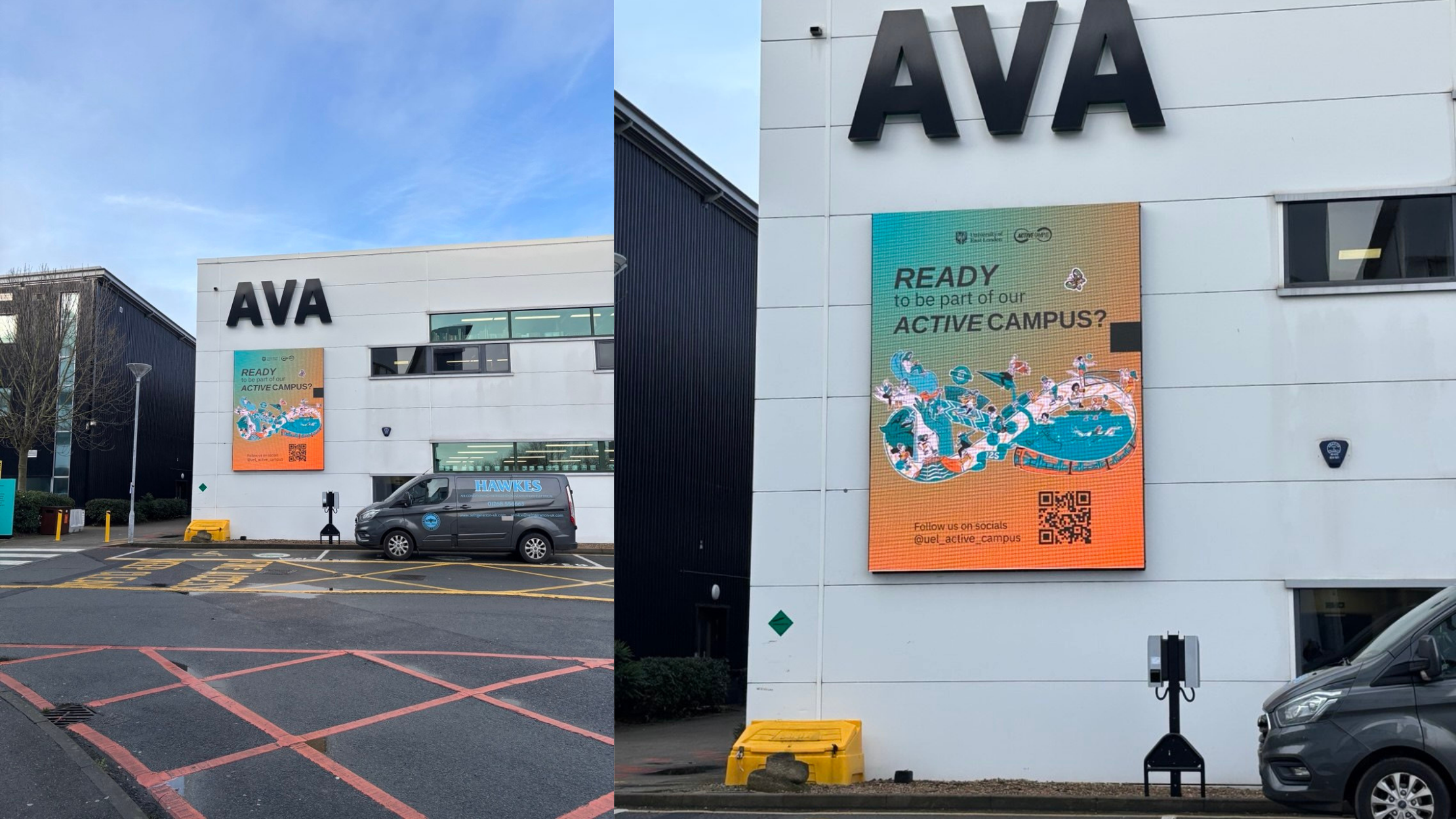
Background & Business ChallengeSituation
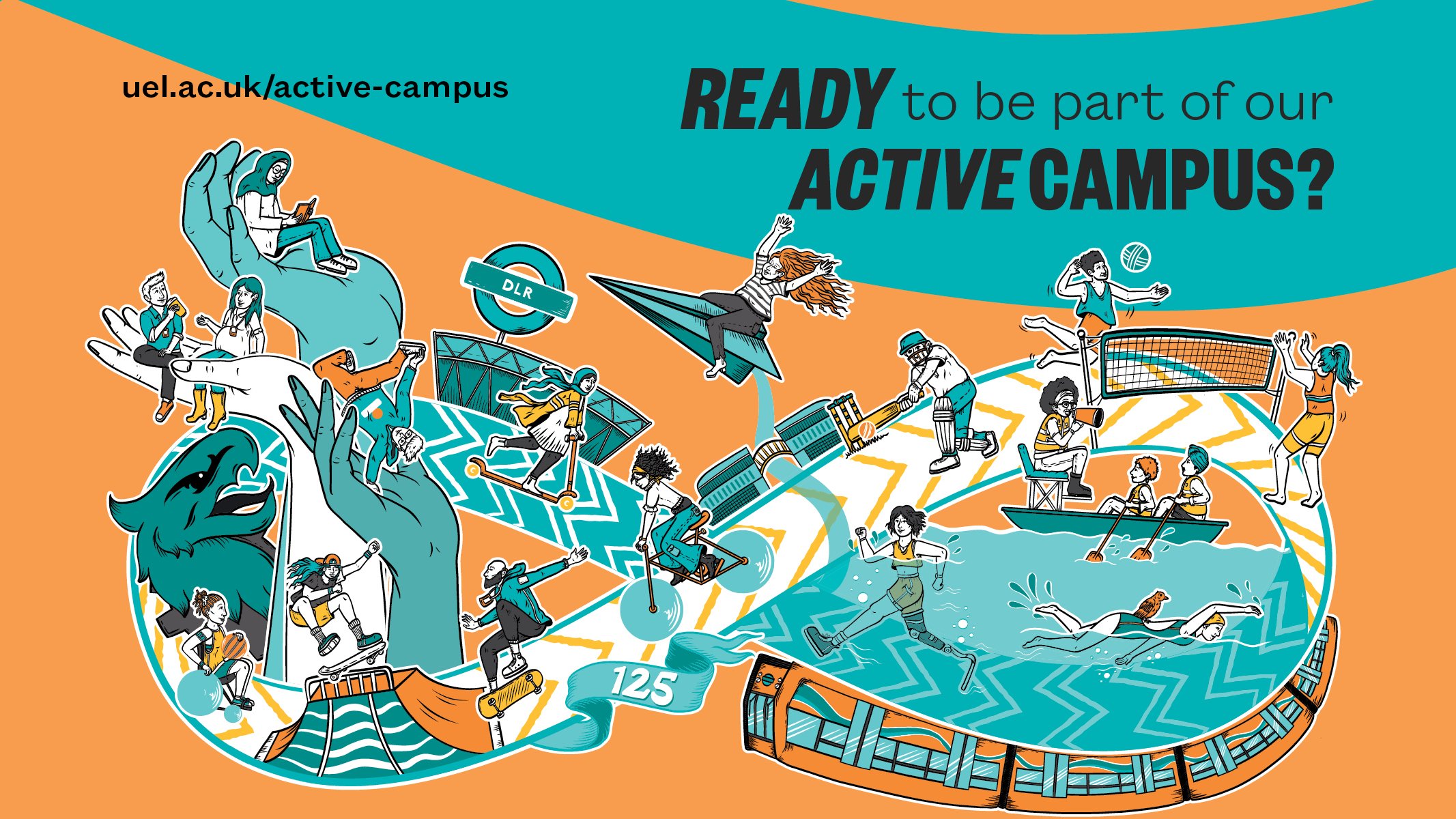
When I first took on Active Campus, just before the campaign was meant to launch - students associated activities on campus exclusively with elite sport and scholarship pathways, not daily wellbeing.
I quickly realised this was not a campaign you launch and move on from. It was a long-term behaviour change programme that needed consistent marketing leadership, not bursts of promotion. The October 2023 launch was only the visible starting line, not the work itself.
From day one, I worked closely with UEL’s executive leadership, particularly the Assistant Chief Operating Officer for Sport & Active Campus, to align marketing with the institutional objectives set out in the Connected Campus and East London Global Sport Strategy. That relationship mattered because every decision I made had reputational, political, and financial consequences beyond marketing.
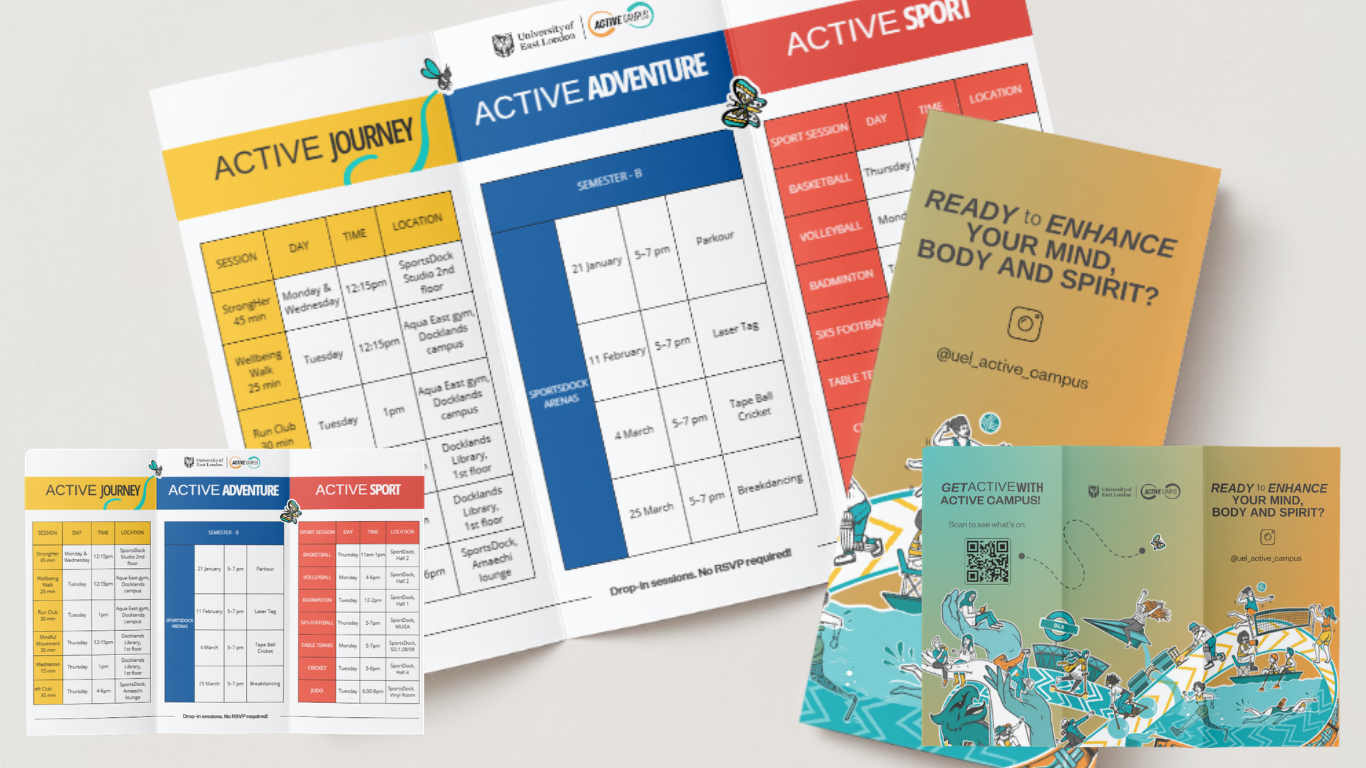
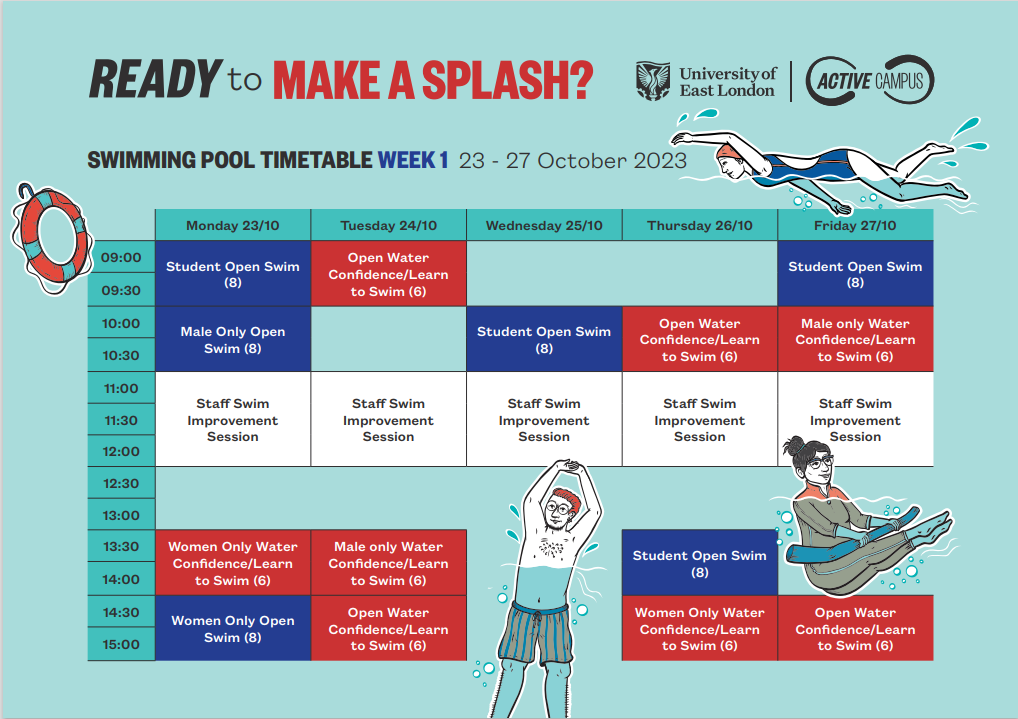
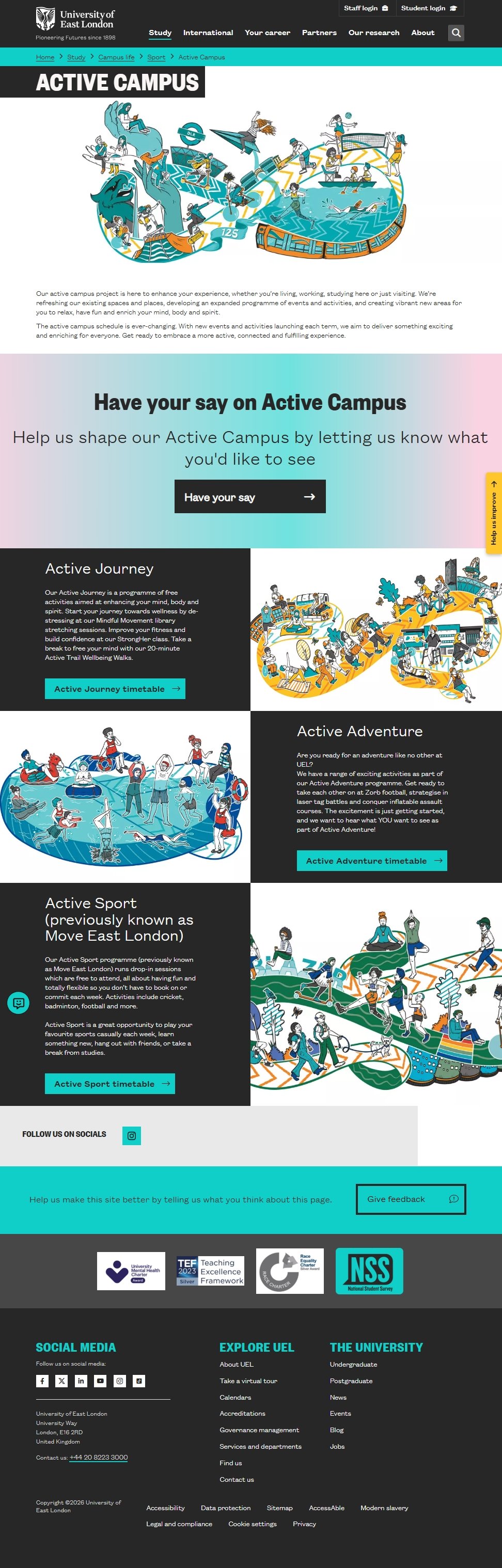
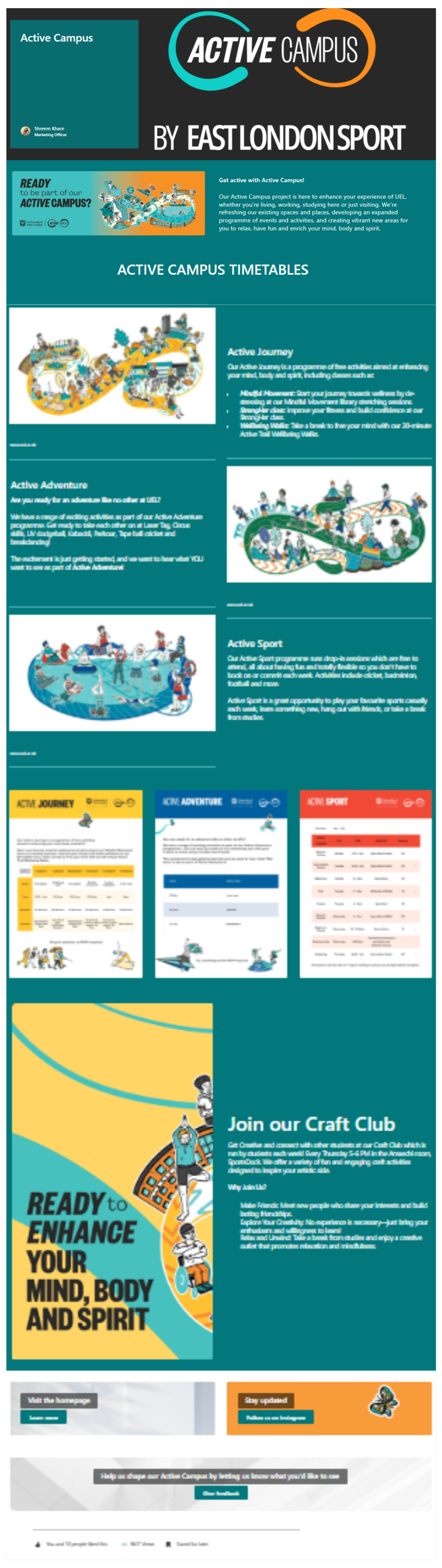
Launching webpages Task
The University of East London had invested millions into elite sport facilities, yet internal data showed a clear problem: most students did not feel those spaces were for them. Sport was perceived as performance-led and exclusive, which meant the wider student body disengaged.
My task evolved over two years. Initially, it was to shift that perception and reposition activity as part of everyday wellbeing and student life, not as something reserved for athletes or scholars.
After launch, my responsibility became sustaining engagement, expanding programmes, and proving that Active Campus could operate as a living system across terms, campuses, and cohorts. I was accountable not just for attention but for continuity, participation quality, and credibility with senior stakeholders..
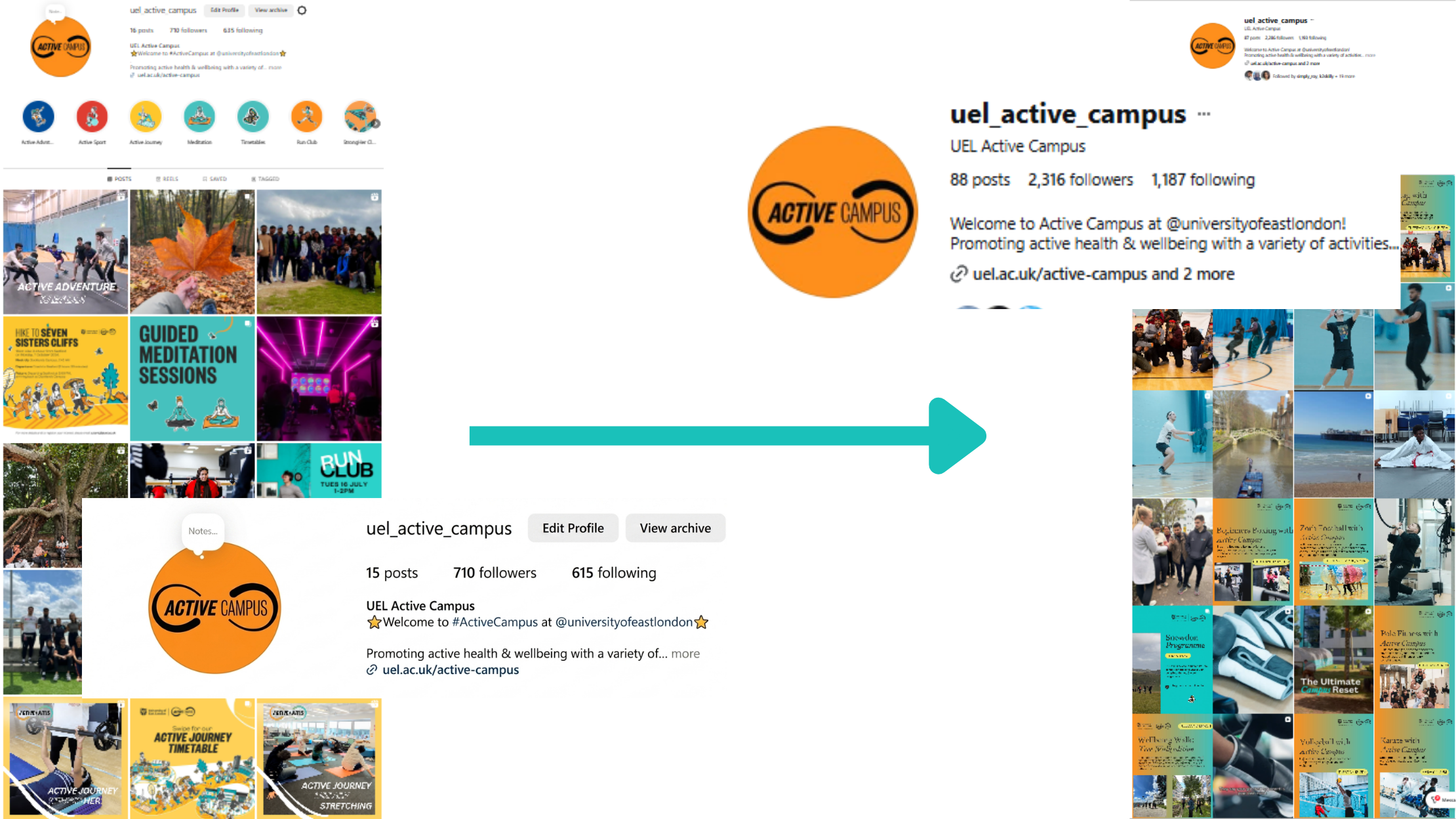
Audience growth - 710 to 2316 followers in a single year.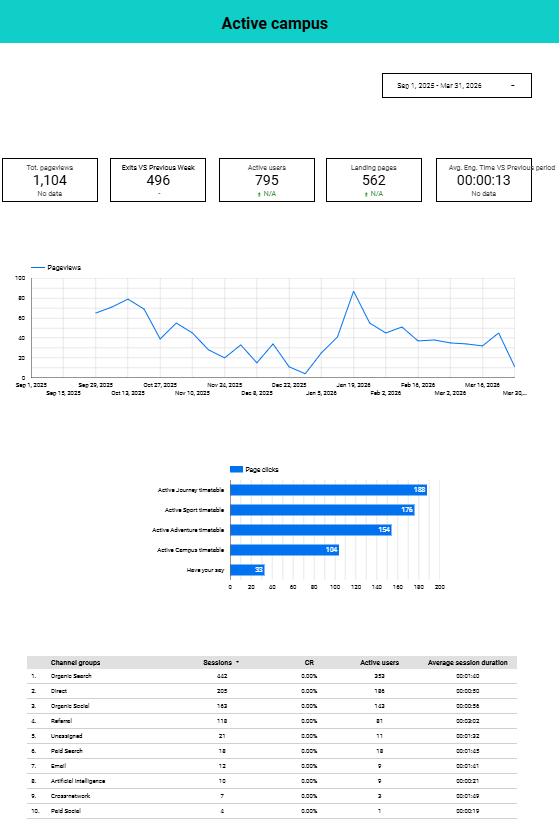
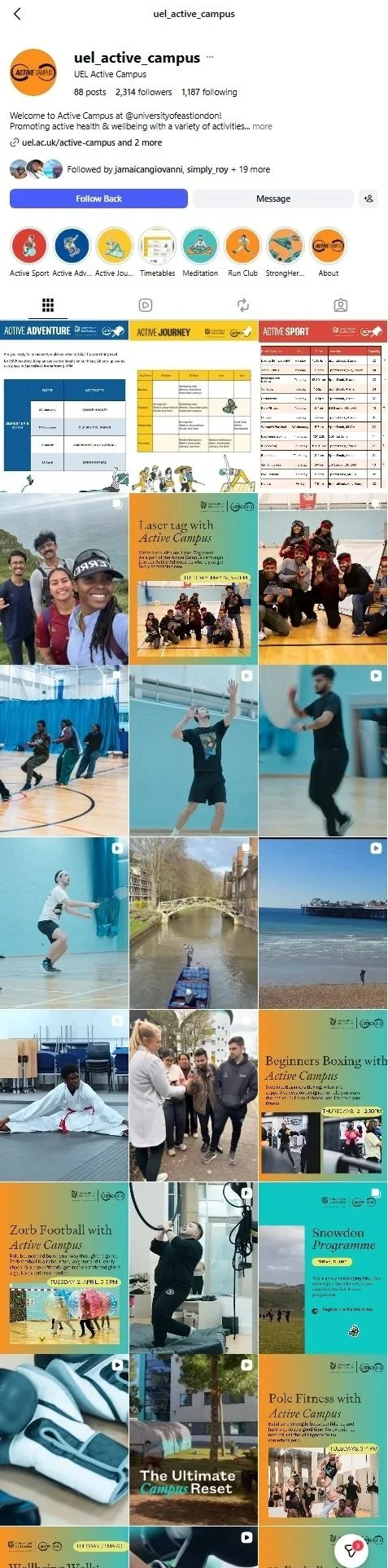
Website analysis for September 2025-March 2026 | Google analytics 4, generated via looker studio phase one: launch as proof of conceptAction
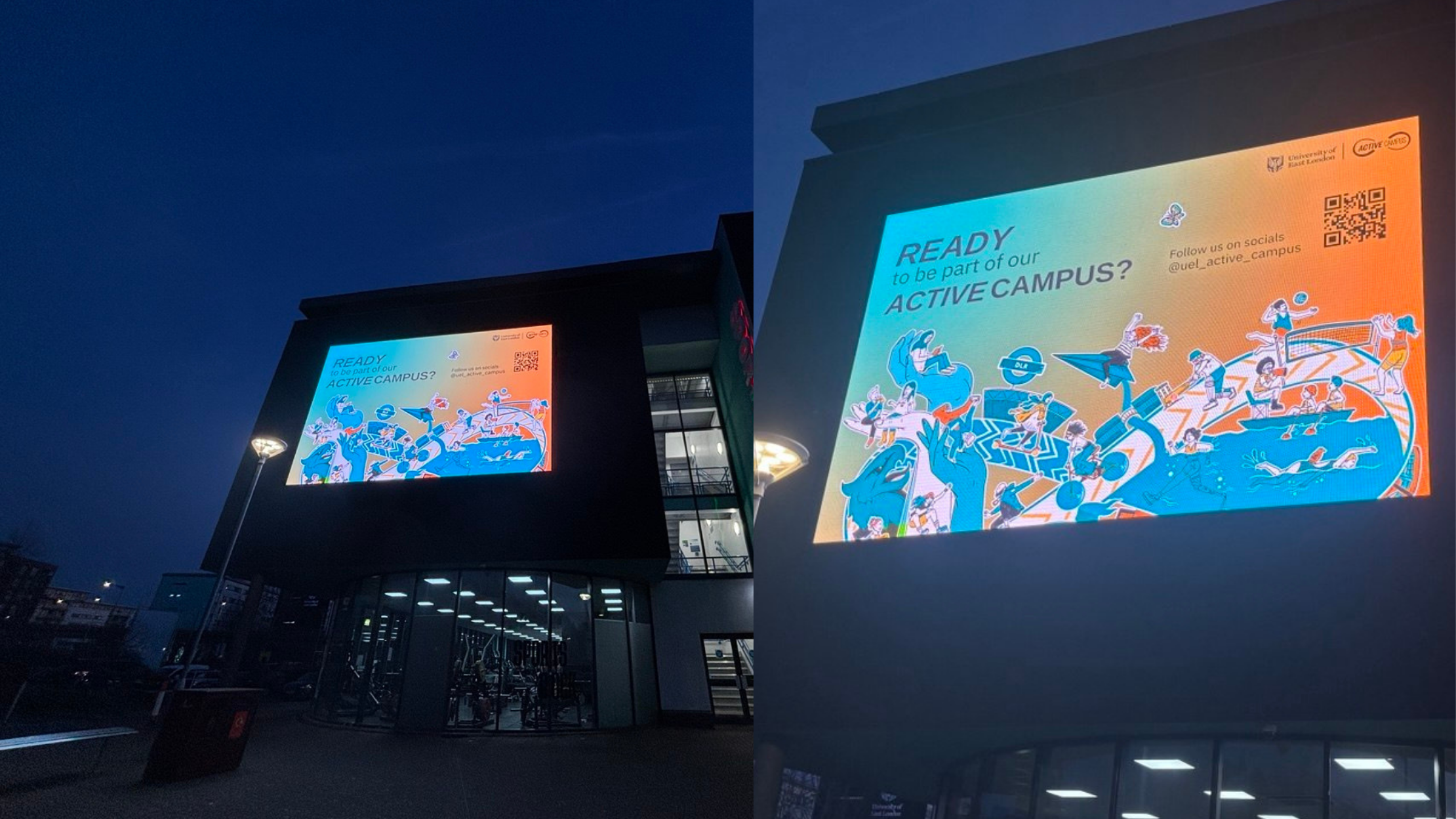
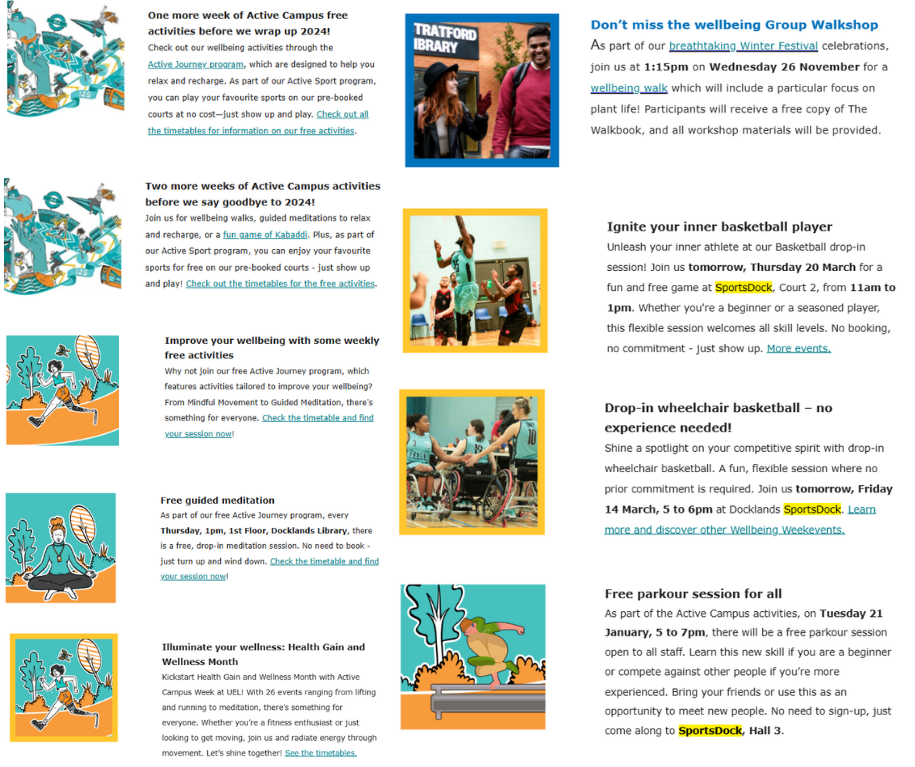
After launch, I deliberately shifted away from event-led marketing. I treated Active Campus as an always-on platform. I built a consistent visual system, messaging hierarchy, and channel rhythm so students encountered Active Campus weekly, not seasonally. I worked closely with the ACOO, Director of Sport, central comms, student services, residential life, library teams, careers, and academic schools to embed Active Campus into everyday university communications, calendars and timetables rather than isolating it as a sport project.
I introduced structured CRM email flows tied to timetables, not generic newsletters. I prioritised actionable copy that pushed people to schedules rather than inspirational messaging. I integrated Active Campus into the university events calendar, intranet, welcome comms, push notifications via track-my-future app and central social channels to borrow institutional trust while keeping a distinct tone.
I also leaned into community management. I treated social channels as two-way infrastructure, answering questions, responding to feedback, and building joint content with internal and external partners. This wasn’t about follower vanity. It was about lowering friction for attendance and making participation feel normal.
Two years laterResults
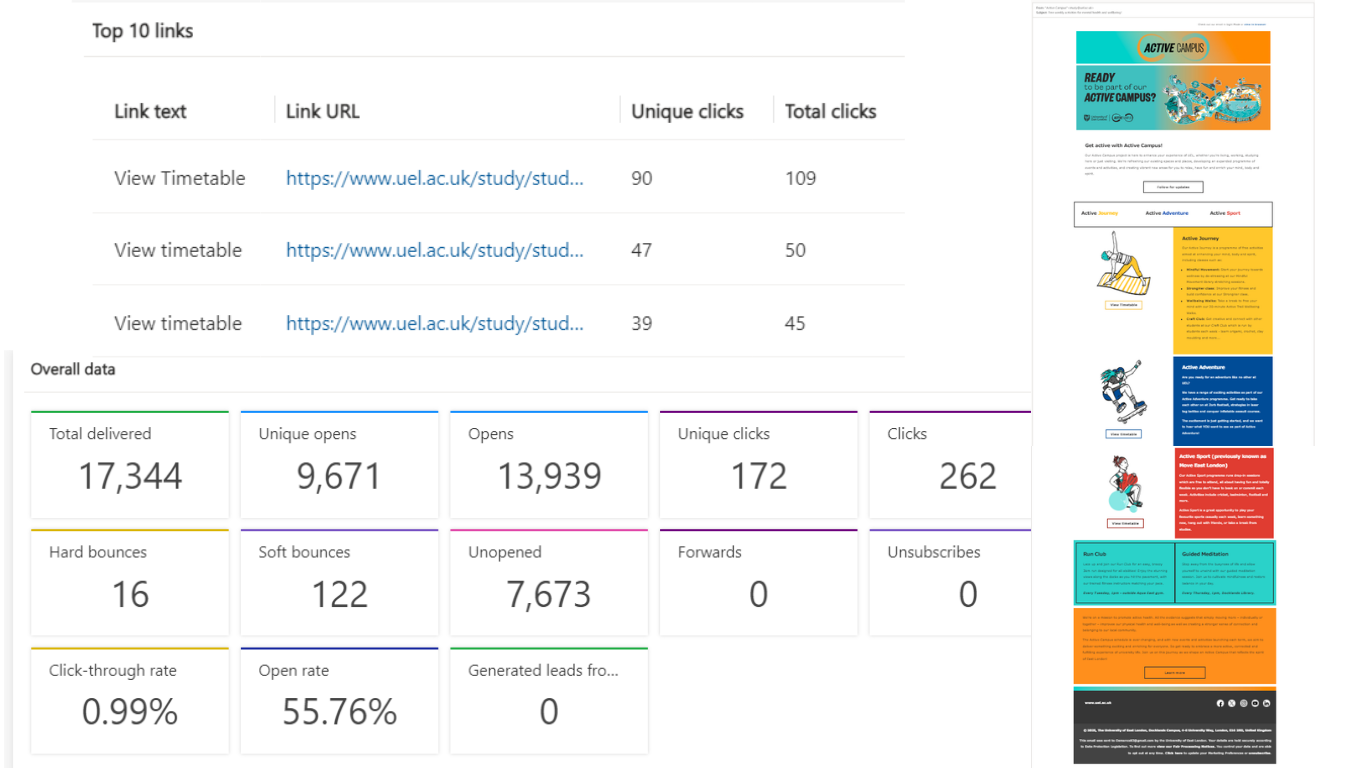
By September to December 2024, the difference was structural. Website traffic reached over 4,100 page views in a single term, with users spending an average of 145 seconds engaging with content, largely driven by organic social and search rather than paid bursts. Email marketing achieved a 55.7 percent open rate across 17,000+ deliveries, with timetable links consistently the top click driver. Social channels grew from zero to over 600 followers with engagement and impressions increasing by more than 1,400 percent compared to early benchmarks. Crucially, most views came from non-followers, indicating reach beyond the core audience rather than preaching to the converted .
This mattered more than raw numbers. It showed Active Campus had become recognisable, navigable, and expected. Students did not need to be convinced each time. They knew where to look and what they were opting into.
Results per channel
-
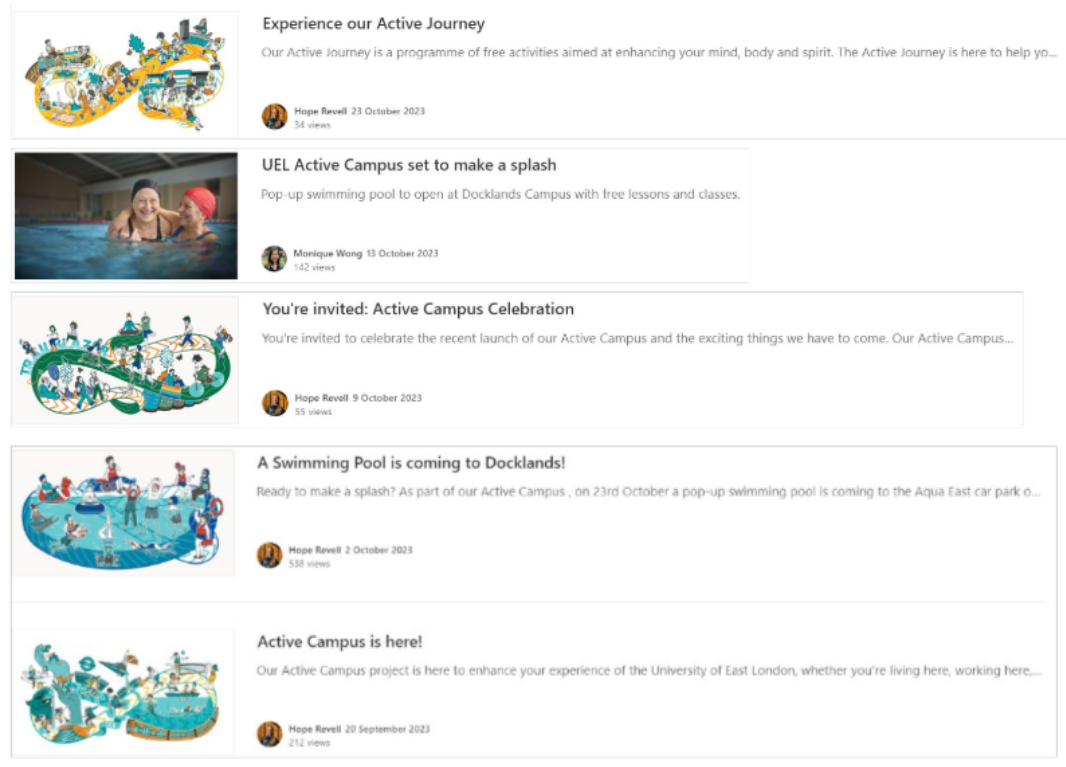
Page traffic is driven from - TMF, newsletter features and social media.
Showcasing events on the university calendar may have boosted the visibility of the campaign
leading to higher event attendance overall.
Enabled advance planning and booking the event - another reason for increase in attendance.
Active Campus programmes featured in the calendar most likely increased brand awareness and association of wellness events to the brand.
-
14 newsletter features.
Student newsletters targeted an already engaged audience who had opted in to receive information leading to an increased visibility.
Gave the audience a call-to-action opportunity leading them to the intranet, website or social media pages or to download the timetables.
Regular features may have led the students to recognise Active Campus programme and its visual identity.
-
4135 page views since September, with 1655 active users and 660 new views spending 145 seconds on average.
Page visits peaked during big events like welcome week, hikes, pop up events, start of the year. Most traffic is derived from organic socials and organic search.
-
Since we started the page from scratch the numbers had all been positive - the main focus had been building a community through socials.
Direct communication with both internal and external stakeholders built stronger relationships and created joint content, reaching wider audiences and leveraging complementary follower bases.
Daily reminder comms of upcoming events helped maintain awareness and potentially increased attendance.
Community management helped with direct feedback, answering queries and engage with the audience.
Active campus in the news
The marketing of Active Campus was a primary contributor to the university’s meteoric rise in national prestige. The initiative’s visibility supported the institution's shortlisting for University of the Year at the Times Higher Education (THE) Awards 2025. Furthermore, the focus on student experience helped UEL rise 80 places in three years to rank 33rd in the Guardian University Guide 2026.
Participation: Active Campus participation increased by 47 percent within the first year.
Reputation: Secured a high-status collaboration with UKSI to share high-performance expertise with the student body.
Institutional growth: Transitioned the initiative into a broader "Connected Campus" strategy for the upcoming "Year of Health."
Owned Media
UEL News (July 2025): UEL Achieves Multiple Firsts in National Student Survey Marketing Effectiveness (KPI: Student Satisfaction). Proof that your engagement campaigns contributed to UEL being 2nd in London for "Overall Positivity" (86%).
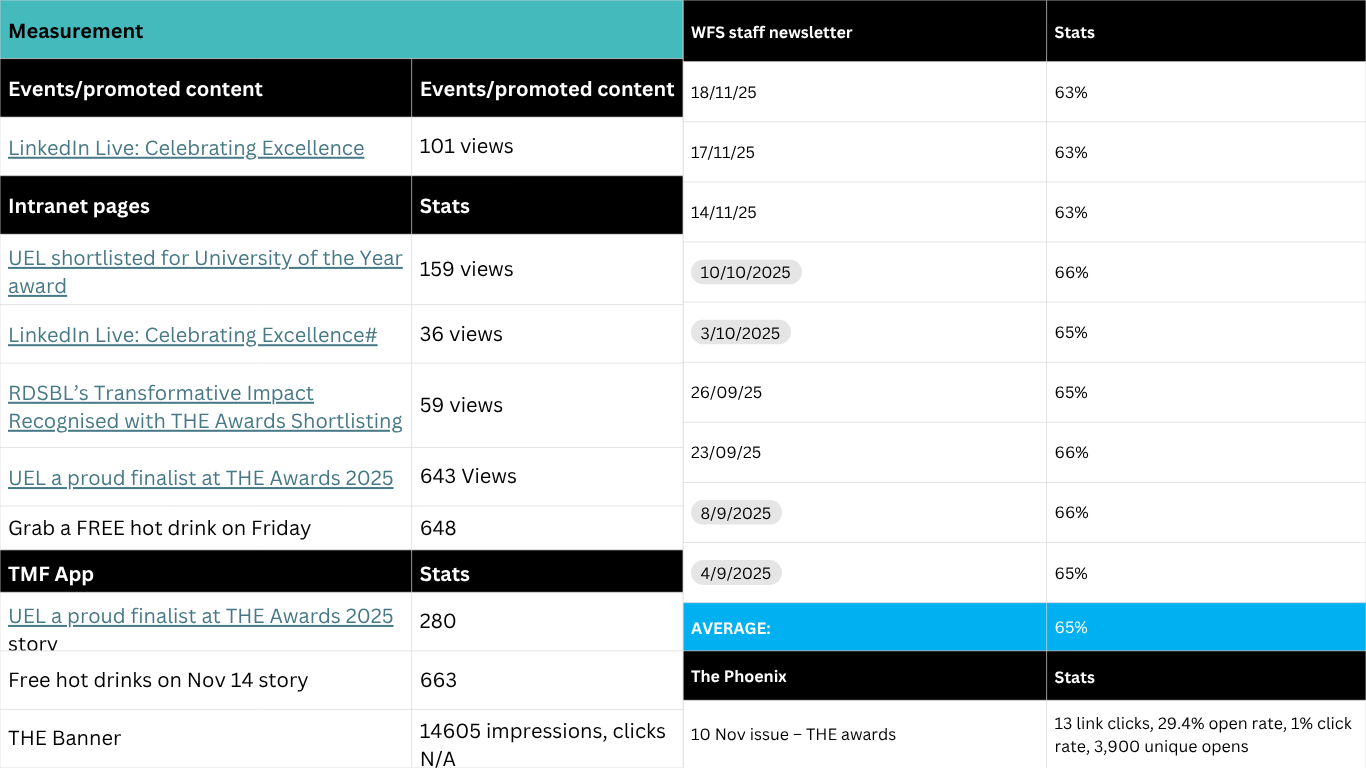
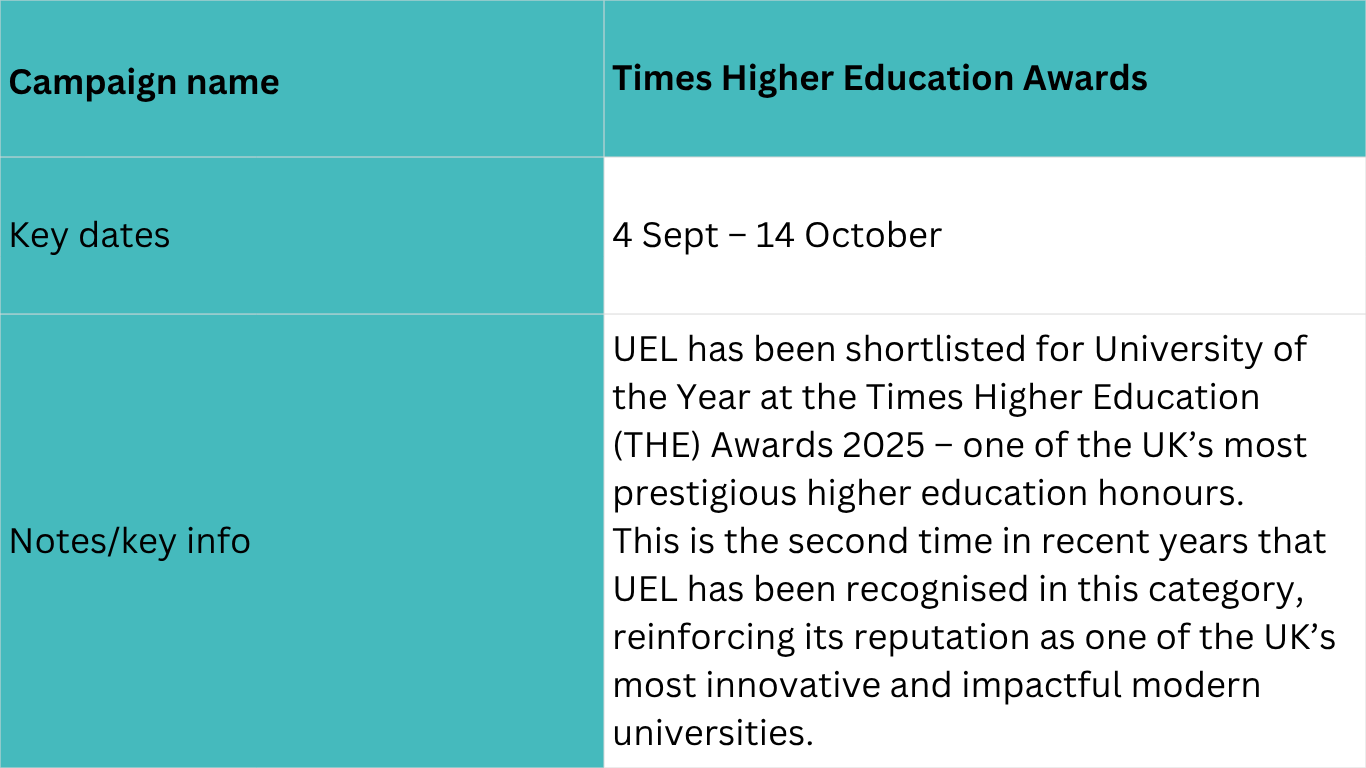
Internal comms stats for Times Higher Education Awards Earned Media
Organisational impact
Over two years, everyone involved in the campaign watched behaviour shift. Students used the Active Trail between lectures without prompting. Non-traditional activities like aerial fitness, kabaddi, craft club, and guided meditation outperformed some conventional sport sessions, validating the original segmentation logic.
Internally, Active Campus stopped being framed as “sport marketing” and started being referenced in wellbeing, retention, and student experience conversations at senior level.
From a leadership perspective, I learned how much marketing in this environment is about trust. I had to speak the language of executive stakeholders, align with Vision 2028, and still protect the clarity of the student message. I pushed back when governance and approval workflows diluted accessibility, and I compromised when institutional alignment was non-negotiable.
Human impact
By normalising physical activity through activity trails and accessible pool sessions, we created a visible culture of health. This didn't just improve fitness: it created a sense of belonging for students who previously felt disconnected from campus life, providing them with the confidence to stay the course of their degree.
Reflection
The biggest lesson was that sustained marketing leadership beats perfect launches. The 2023 metrics proved viability. The 2024 performance proved durability. I learned to design marketing systems that survive staff turnover, academic calendars, and shifting priorities. Active Campus worked because I treated it as a long game, not a moment. If I were starting again, I would still launch boldly, but I would talk even earlier about ownership, cadence, and long-term measurement. That is where real value was created.